
📁 RETURN TO FIRST IMPRESSIONS
📁 RETURN TO CHA REVIEW OF BOOKS AND FILMS
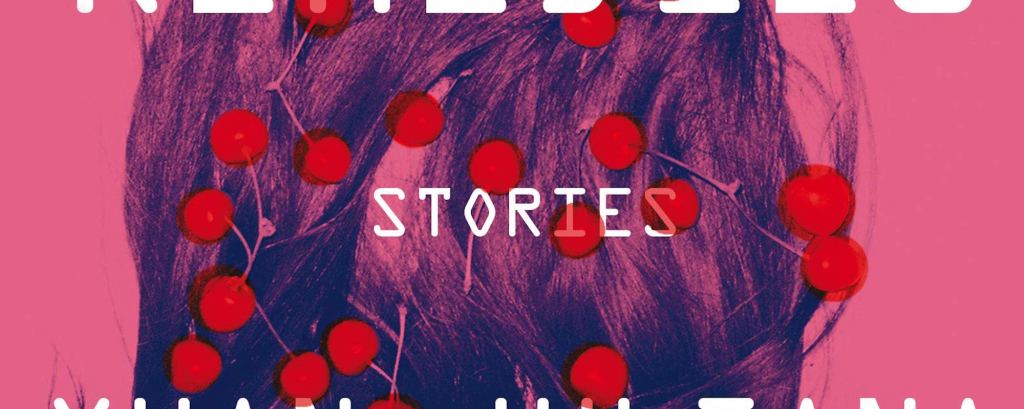
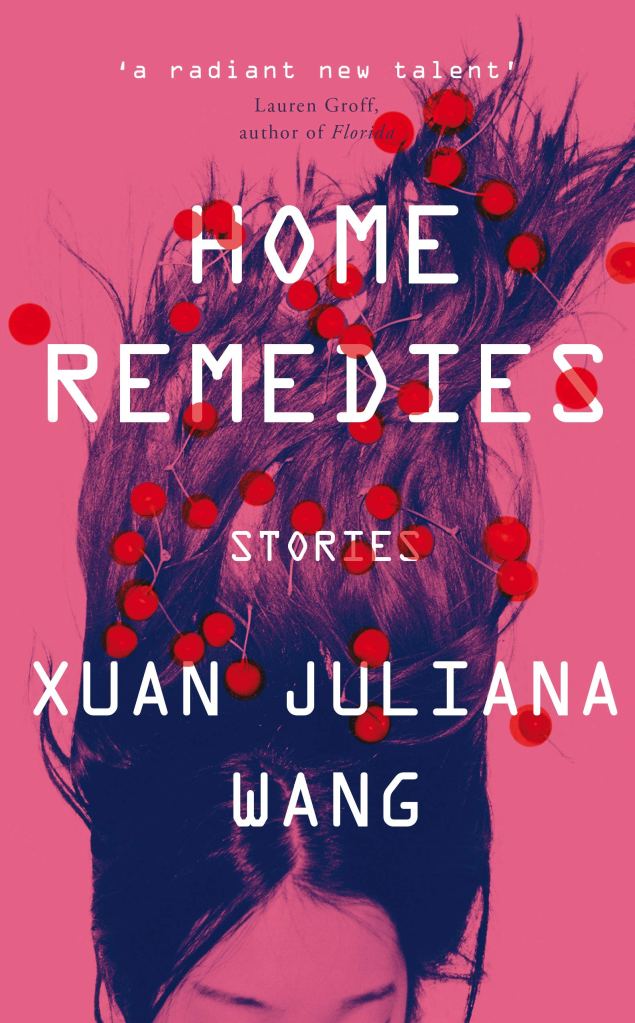
Xuan Juliana Wang, Home Remedies, Penguin Random House, 2019. 240 pgs.
Watching Olympic diving is agonisingly tense, even as I sit at my laptop in London to watch, 9,500km away from Tokyo. This year’s Olympic Games, delayed by the pandemic, have been a strange affair to view from afar. But diving never disappoints. In the men’s pairs, my eyes are glued to the screen watching two synchronised bodies in controlled freefall from a board 10 metres above the water. The dive is over in a matter of seconds—the wait for results is the part that stretches on forever.
It seems serendipitous to have read Xuan Juliana Wang’s story collection Home Remedies at the same time as the Tokyo games, partly because of the short story “Vaulting the Sea”—ostensibly a short tale about Olympic diving, yet also not really about diving at all. As its categorisation under one of three sections in the book titled simply “Love” suggests, the story explores the unrequited, secret love of one diver, Taoyu, for his aquatic partner, Peng Hai. In a matter of pages, Wang transports us through the boys’ adolescence, when they are coached with the sole goal of winning gold, to their young adulthood and all the pain that first love brings, to their partnership’s eventual demise. The descriptions of the exhilarating thrill of hitting the water in a competition dive are synonymous with the sensation of falling in love itself:
To the people in the stands, they looked like two wings of a single bird. The pool was the sea and the impact an embrace…the water burst open in a cosmic flower, blooming exuberantly before disappearing, its fizzing petals melting back into stillness.
Watching the Olympics at the same time as reading Home Remedies brought up other parallels for me. Wang’s cast of characters ranges from bratty Beijing nouveau riche kids to the factory worker sacrificing his existing life in pursuit of a better one for his mother, creating a selection of stories as varied as those you might get at an international sporting event. Even Wang’s dedication, to her parents, “for letting me chase my dreams”, reminded me of that emotive optimism that sports can evoke in us (even for the usually sports-averse, like me).
Each of these tales is textured with a richness transcending borders, driven by a clear love for writing immigrant experiences—note the plural, not the singular—against rapidly changing vibrant backgrounds. Wang’s own tribute to Mott Street, in New York City’s Chinatown where she once lived, opens the collection, with the intimacy of a family’s relationships set against the sights, sounds and smells of a community clinging to tradition, yet increasingly affected by the exogenous force of gentrification.
Leading readers through the sections of “Family”, “Love” and “Time and Space”, Wang shows her versatility in form and voice, demonstrating how internal migration within the mainland is changing Chinese society too. Through a series of short vignettes, “Days of Being Mild” introduces us to Beijing’s Bei Piao—newcomers to the city with “uncertain dreams but our goal is to burn white-hot, to prove that the Chinese, too, can be decadent and reckless”. They certainly can in this short story, and another that appears to be its companion of sorts, “Fuerdai to the Max”. In the latter, the flashy rich kids of Beijing’s elite return home from their fancy colleges in the US, having left chaos in their wake a hemisphere away. Yet there’s an undercurrent of wistfulness in the tone of these two stories in the collection—the flames of these young people might burn brightly for now, but they have the potential to become either uncontrollable or fizzle out. The last two lines of both contributions evoke a similar sense of longing, meditations on the possibilities of youth, yet trepidation for what might come next.
“We have passion, but do not know why. What are we fighting for? Where is our direction? Do you want to be an individual? Or a grain of sand.” —Days of Being Mild
“I have to admit, if only for that fleeting moment, I feel something, too.” —Fuerdai to the Max
In the titular “Home Remedies for Non-Life-Threatening Ailments” and “Algorithmic Problem-Solving for Relationships”, which falls under the “Time and Space” category, Wang demonstrates playfulness in form, making both stories memorable. Sometimes, unusual structures can feel contrived or slightly incongruent, especially if they’re the only of their kind within a collection of otherwise generally typical prose. But Wang’s narrator in “Home Remedies” is endearing, instructing us readers through a series of steps to aid problems, each with caveats including “Boredom (Born from general confusion stemming from lack of clear direction/complete misunderstanding life’s purpose)” and “Anxiety (Stemming from unfulfilled potential, general nail-biting about the future)”. Sound familiar? It certainly did to me, especially during the existential crisis of the last 18 months. I could relate to this narrator, finding the universality in the specificity of their dilemmas, without finding them to be self-pitying (even though they do identify this as one of their ailments that requires a home remedy).
For me, “The Strawberry Years” was perhaps the most charming of the collection. Freelance photographer Yang is a young man who has moved from Changchun in north-east China, to New York City; his unremarkable life of scraping by on freelance photography gigs is interrupted by two women: one a dream mirage and the other an unnamed actress, whom he is unwittingly charged to chaperone from JFK airport. The actress, with all her glamour and online fame, comes to dominate his life and living space, taking a shine to Yang’s apartment, “his dim bedroom with its broken wooden chairs and the mattress on the floor”. For her, its grittiness is the marker of the “authentic” New York City lifestyle, and one that she can share with her legion of social media followers in real time. After Yang is relegated to his roommate’s bedroom as the actress takes over his own, the life he has worked hard to gain and maintain becomes almost an acting exercise for her—lending weight to the idea that with migration comes reinvention, especially when we consider that she is never named. And as she takes on the persona of a New Yorker within weeks of her arrival, Yang still thinks, dreams in Chinese, training himself to respond to questions in English.
As he lay awake, he could understand why the actress had come to New York, a city without parents, and had set up camp in his apartment, a place where there was nobody to say “I know you, I know what you’re capable of. What kind of person you are.”
Again, this line returns back to the theme of dreaming about what might be and the idea of reimagining one’s self that is so prevalent throughout Home Remedies. As I write this, the Tokyo Olympics have just come to their close, a games full of contradictions in the age of the COVID-19 pandemic, where world-class athletes are pursuing their dreams in stadiums in front of a handful of scattered spectators. After a time of such disruption, the optimist in me feels like we are finally daring to dream ways of rebuilding the world and its systems. In Home Remedies, Xuan Juliana Wang introduces us to characters who have built their own universes.
How to cite: Haynes, Suyin. “Building Their Own Universes: A Review of Xuan Juliana Wang’s Home Remedies.” Cha: An Asian Literary Journal, 09 Aug. 2021, chajournal.blog/2021/08/09/home-remedies/.


Suyin Haynes is Editor-in-Chief at gal-dem, a U.K.-based publication committed to sharing the perspectives of people of colour from marginalised genders. Previously, she was a Senior Reporter for TIME based in both London and Hong Kong. Find her @suyinsays on Twitter and Instagram, and read more of her work at suyinhaynes.com.
 Cha
Cha 