This post was originally written on 20th May, 2010
 |
| Lorrie Moore |
Today, Paris Review tweeted a quote by the short-story writer Lorrie Moore: “If one loves stories, then one would naturally love the story of the story.”
I agree with Moore and I think what she said is true about poetry as well. If you read a poem and like it, you would naturally want to know the story behind it. If you are not curious about that story, that means you do not like the poem enough to care.
Every poem has an impetus. It must be inspired by something: a person, an emotion, a story, a thought, a dream, a smell, a kiss, a sound, an argument, a yearning, a death, whatever. The poet can tell you the origin of a piece of work. The poet must know. This should apply to every form of art, not just poetry: painting, film, music, photography, sculpture, etc. — every art piece has an origin and the creator must know it.
And the real reader should be curious. Or else? S/he is pretending. S/he is a fake and does not know a damn thing. Even though the reader’s desire to learn more may be frustrated (and in some cases this desire can never be sated), curiosity is the making of a good reader.
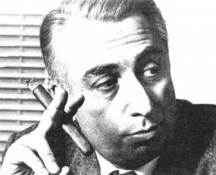 |
| Roland Bathes |
As a practising poet (if I may call myself this), I am reluctant to side with New Criticism. But while I think the living author’s story should be heard (and solicited), I also strongly believe that once a piece of creative work is finished, it takes on a life of its own. The work no longer belongs to the creator and it is open for any number of interpretations.
Thus, the ‘origin’ of a piece, intimate to the creator, becomes one aspect of the work and does not necessarily contribute to its definitive explanation.1 The ‘origin’ has to give way to the ‘destination’ — the reader. The author is now dead, the work is alive, and hurray, the reader is born through the imaginary vagina of the page. As Bathes says in this essay, “the birth of the reader must be at the cost of the death of the Author”.
Trained partially by postmodern theories and texts, I agree with Bathes. But to be honest, I am not willing to die for a careless reader.
–
–
1Read the articles on
A Cup of Fine Tea and you will know what I mean. We want the writers to tell us the story of their piece, but we also gladly welcome different or even ‘deviant’ readings.
–
–
4 Responses “The real reader should be curious” →
Bob Wood [Link]
May 20, 2010
A live reading usually provides a pleasant context for poems, a story of the poem, but there are so many kinds of poems that it is hard to generalize. Confessional poems explain themselves. Ekphrastic poems have obvious sources. Haiku should not be expanded–otherwise what’s the point?
alf [Link]
May 21, 2010
Some compelling stories have pretty mundane origins, and it’s the writing that makes the story. Especially true of poems.
Gontran [Link]
May 21, 2010
I prefer Nabokov’s view to Barthes’s:
“Up a trackless slope climbs the master artist, and at the top, on a windy ridge, whom do you think he meets? The panting and happy reader, and there they spontaneously embrace and are linked forever if the book lasts forever.”
theforc [Link]
June 3, 2010
I’ve enjoyed your article a lot. However, I disagree with two of your arguments. First, an artist can very well create a worthwile piece of art without any specific “origin”. A female writer for example can write a good book from the point of view of a man; without needing to defend accusations of being fake or not knowing a damn thing, as you put it.
Secondly, text-focussed interpretation and fidelity to the author’s “impetus” are not mutually exclusive. It’s often illuminating to interpret a piece of art without any background knowledge; from the text/picture/film itself. And then, in a second step, compare your findings to authorial intention, origin of inspiration etc. The author needn’t die, for the reader to interpret the text independently from its origins.
–
–


 Cha
Cha 